PR agencies charge $3,000–$10,000/month with no guaranteed results, and 72% of startup founders say they can't afford professional PR. Yet founders who pitch their own stories have a 34% higher response rate from journalists than agency pitches, because personal founder stories are more compelling than polished PR speak (Cision State of the Media, 2024).
Dmitry Dragilev has done his own PR across 4 company exits without ever hiring a PR agency. He used self-directed outreach to earn coverage in Forbes, TechCrunch, The Next Web, Entrepreneur, and 200+ other outlets. This guide covers the exact process he used.
PR agencies sound great—until you see the price tag and the underwhelming results. Many founders learn the hard way: agencies overcharge, oversell, and often miss the mark on telling your story.
The truth? You don’t need them. With the right approach, you can get media coverage, build credibility, and grow your brand—without a middleman.
If you are an entrepreneur or run a small business, here are far better ways to get media attention.
Key Takeaways
- Why pay $12K a month for 3–5 stories when you can DIY PR for a fraction of the cost?
- You’re the best storyteller for your brand—no agency knows it better.
- Journalists trust people, not agencies. Build those relationships yourself.
- Skip the red tape. When news breaks, you can pitch in minutes, not days.
- Google News beats Google Search. Hunt for journalists actively covering your space; they're already interested in your story type.
- Become a source before you need coverage. Help journalists with their stories first. They'll remember when you pitch yours.
- Track what actually matters. Website traffic from coverage beats vanity metrics every time.
Why DIY PR Beats Hiring an Agency
Most small businesses pay around $12K a month for a PR agency. In return? About 20 hours of work a week and maybe 3–5 media stories. Not exactly a great ROI.Here’s the truth: you don’t need a PR firm to get noticed. With the right approach, you (or a team member) can:
- Pitch journalists directly and build genuine relationships.
- Craft authentic stories only you can tell.
- React instantly to news and trends—no approval bottlenecks.
- A SaaS founder landed features in TechCrunch and Forbes by personally pitching her startup’s growth story. No agency involved.
- A local coffee brand got TV coverage by sending journalists free samples with a short, personal note.
- I’ve run my own PR for 6+ years and consistently secured better coverage than agencies ever delivered.
- You sharpen your storytelling skills, strengthening pitches, investor decks, and customer communication.
- Journalists start trusting you as a go-to source, opening doors for ongoing coverage.
- You save thousands monthly—and often see better, faster results.
Here are the 7 steps that I use to do my PR:
1. Search Google News to Find Articles Related to the Topic You’d Like to Pitch
As an example, I just finished a study that found that a used Tesla Model S costs, on average, $30,000 more than a brand new Tesla Model S. It’s a hot study, and it’s surprising, and I want reporters at different media houses to know about it. So, I did a Google News search for “Tesla new vs. used.”This is a better strategy than doing a random search in other search engines since it delivers more relevant results.
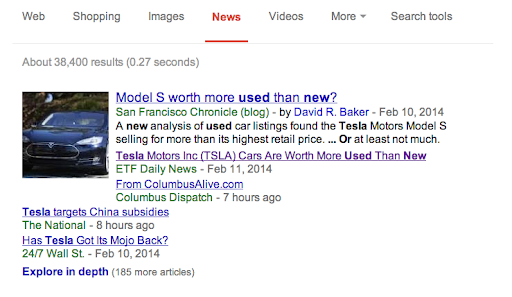
2. Verify the Article is Relevant to the Topic You’re Pitching
I click on the articles in Google News that look relevant to my pitch about the Tesla Model S study. I’m trying to find a perfect fit, a reporter interested in Tesla and new vs. used pricing.If it’s an article about Elon Musk’s statement about Tesla restoring electricity at a Puerto Rican children’s hospital, this is not a good fit. If it’s an article about Tesla’s recalls or Tesla’s business model, it’s also not relevant.
Finally, if it’s an article older than 3+ months, chances are it’s not relevant. I’m looking for something recently written about Tesla’s pricing of used vs. new. It has to be very relevant; this is vital when doing PR for your business.
I like how Austen Allred forms his pitch angle when he is reaching out to reporters to build relationships with the media for his business:
Is it timely? Is it relevant? And is it interesting? Why would someone like you be interested in reading this?
Again, we’ll take my startup, Grasswire, for example. Grasswire is an Internet newsroom that lets everyone fact-check and sort social media content in real time. But what does that mean?
“That’s what a ship is, you know. It’s not just a keel and a hull and a deck and sails. That’s what a ship needs. Not what a ship is. What the Black Pearl really is, is freedom.” — Jack Sparrow.
What Grasswire needs is an Internet newsroom. But what Ggrasswire is is a democratization of journalism and information. It’s turning over the power of governments and corporations to everyday people. It’s letting ordinary people control the information that determines how they see the world.
Not many people want to read about yet another social media tool. People love to read about freedom.
3. Find the Name of the Journalist and the Publication They Write for
The next step is to find the name of publications your target audience, the journalist, writes for.This part is easy. I look through the article to find the name of the person who wrote it. Sometimes it’s a person from another media house, for example, it might be a Bloomberg business reporter who published something on USA Today.
Since we are trying to find journalists who write about Tesla’s pricing model, they would probably be business or financial journalists.
Remember this since every journalist has a specific beat or field they write about. This is relevant for your pitch, as you don’t want to target a reporter who usually writes about Tesla’s designs or engineering aspects.
Determine whether they’re a freelancer or a reporter for a specific publication. Pay attention here: click on the reporter’s name to view their profile and see which publication they write for. Sometimes the email is hidden in a pull-down menu under the name – check for that.
Verify it by checking their Twitter profile. They may also be freelancers, which means they have a personal email address rather than a publication one.
4. Write the Email Subject Line
This is a crucial part of your email when reaching out to the press for your business.After reading this, they’ll either open your email or ignore it. They have 287 emails to go through that day, their chat client is blowing up, and they need to write four stories. Your email has to capture their attention.
Usually, I ask myself, “What is the headline of my pitch?” If I were the reporter’s boss (the editor) and had to look over this story, what would I want the headline to be for this story to shock or surprise readers? In my case, it might be something like this:
Why Used Teslas Cost $30,000 More Than A New Tesla
Not perfect, but something along those lines. Neil Patel, a friend of mine, has tested a lot of email subjects in his time and has found that the following one works the best when you want to do good PR:
Don’t you hate it when people pitch you story ideas [insert their first name]?
5. Construct the Body of the Email
This is where most email pitches fall apart. Business owners put an entire press release, three detailed paragraphs of their project plan, or just a bunch of links to show how legit they are.Remember, they have 287 emails in the inbox, an IM client blowing up, and four stories to write. They have no time to read detailed emails or click on links about your product.
Pretend you bumped into them at a conference. You said hello, and they responded. You shook hands, and now you have 15 seconds to capture their attention. Your comment can get two responses: “Thanks, I’ll pass this along to others” or “I had no idea; that is fascinating!” What do you say?
So here you need to appeal to the reporter’s interests when you run your own PR campaign.
You might want to look through their profile and see other types of articles they write, questions they ask, and things they tweet to get an idea of what kinds of things would pique their curiosity.
For instance, if you are a fashion designer who sells her products in a pop-up shop rather than relying on social media and e-commerce, and find out that your target reporter is interested in unique methods brands use to reach out to the public, you have a great starting point for your email pitch.
There is no perfect email template; you just have to play around with it. But never send an entire press release in the email, even if a PR expert or publicist insists you do.
For example, if I use Neil’s subject line from above and his email format, I’ll alter it slightly. Here is an example:
Subject: Don’t you hate it when people pitch you story ideas [insert their first name]?
I also have a story pitch, but before you hit delete, just give me 37 seconds, or else you’ll regret this for life! So here it goes:
You recently wrote a great article on Teslas. I really enjoyed your analysis of their affordability. We just completed a study and discovered that the average price of a used Tesla is $30k more than a new Tesla. I thought this would pique your curiosity.
We are publishing the findings from the study on [insert date], and I wanted to see if you would cover it beforehand. Here are two reasons your readers would love your coverage of this:
Insert benefit #1 Insert benefit #2
I could go on about why you should blog about us, but I won’t overwhelm you with details. If you’re interested, let me know, and we can schedule a chat when you’re free.
Cheers, [insert your name]
Also, I still have 7 seconds to spare, so if you could just hit the reply button and let me know what you thought of my pitch, that would be great. Even if it is “F-off,” any feedback would be great.
Sometimes the email above seems too pitchy and spammy, like a press release, so I use something more along the style of what Austen Allred recently posted on his blog on how to do your own PR:
Hey [name],
My name is Austen from Underwater Audio. We developed a technology that makes iPods completely waterproof. It’s some pretty cool technology you (and your readers) would love. We’re at underwateraudio.com, and I have a [product sample] I’d like to send your way to [review/check out] if you’re interested. Let me know!
Thanks, Austen Allred [contact info]
6. Find the Email Address of the Reporter
This is mostly a mechanical task, but it is crucial to build solid relations with your target audience, in this case, journalists. It does require some work, but all good things do, so let’s get crackin’!- The most obvious place to look for a reporter’s email address is at the top or the bottom of the story or blog post where their name appears. If it’s not there, click on their name to look through their bio page; the email might be there. If not, look at their Twitter profile; it might be there.
- If you haven’t yet, install Rapportive in Gmail to proceed with this step. Remember step #3, where you identified if the reporter is a freelancer or has a full-time job? If they are a freelancer, chances are they use their Gmail address for emailing.
- If they are not freelancers, meaning their bio page states they write for that publication, try the same approach as above with Rapportive and the spreadsheet. If no luck, go on to the next point.
- Head over to http://email-format.com and type in the domain to get an idea of the email format for that publication. You can then substitute their first and last names into the email format and try those. If not, go on to the next point.
- If all else fails, you can use Google+ to contact press people privately. You do not need to be connected with them to reach out. Find them on Google+ and reach out with your message.
7. Reach Out!
Now you’re all set to reach out. You have a very relevant and timely pitch for the reporter that is a perfect fit for your topic or product. You have a very short and actionable email ready for them to read and give you a Yes/No reply. And you have their contact information.The last step in getting press coverage is to send that email.
Quick tip: You might want to install MixMax to see if they opened your email. If you sent five emails and three were opened but didn’t get a response within a few days, you probably need to change who you contacted or your subject and email style.
Essential Tools for How to Do PR Yourself
While learning how to do PR doesn't require expensive software subscriptions, having the right tools in your arsenal can dramatically improve your efficiency and success rate.The tools you choose should support your workflow without overwhelming you with features you'll never use.
Email Finding Tools
Beyond the manual methods mentioned above, several tools can streamline the process of finding journalist contact information.Hunter.io has become invaluable for discovering email patterns at major publications, while Voila Norbert offers a more personalized approach with higher accuracy rates for individual searches.
These tools typically offer free tiers that are perfect when you're just starting to PR yourself.
LinkedIn Sales Navigator, though primarily designed for sales professionals, provides exceptional value for PR outreach. Its advanced search filters allow you to identify journalists by publication, beat, and recent activity.
The investment pays for itself after landing just one major media placement.
Media Database Alternatives
While traditional media databases like Cision or Meltwater cost thousands per month, innovative alternatives exist for those learning to do their PR.Google Alerts remains one of the most underutilized free tools. It allows you to monitor when journalists write about your industry and identify perfect pitch opportunities.
Twitter Lists offer another free but powerful approach. By creating curated lists of journalists in your industry, you can monitor their interests, recent articles, and even personal updates to inform your pitch timing.
Many journalists explicitly state their email preferences and current story interests in their Twitter bios.
HARO (Help a Reporter Out) flips the traditional PR model by letting journalists come to you. By responding to relevant queries with expert insights, you position yourself as a valuable source while building relationships that extend beyond single stories.
Email Tracking and Analytics
Understanding whether your pitches are being read is crucial when you PR yourself.Tools like Mailtrack or Streak for Gmail provide real-time notifications when journalists open your emails, helping you gauge interest and optimize follow-up timing.
If a journalist opens your email multiple times but doesn't respond, it might indicate they're considering your pitch but need additional information.
These analytics also reveal patterns in journalist behavior. For example, you could discover that tech journalists open emails early in the morning, while lifestyle writers engage more in the afternoon.
This data-driven approach to timing can significantly improve your open and response rates.
PR Yourself: Industry-Specific Strategies
Different industries require distinct approaches to media outreach. Understanding these nuances can mean the difference between a polite rejection and front-page coverage.When you do PR yourself, tailoring your strategy to your specific sector demonstrates professionalism and increases your chances of success.
How to Do Your Own PR for Startups
Startup PR thrives on narrative. Journalists covering the startup beat look for stories about disruption, innovation, and the human drama behind building something from nothing.Your advantage as a founder doing your own PR is authenticity—you can share the real struggles and triumphs that agencies might sanitize.
Focus on milestone moments that tell a larger story about your industry. Instead of pitching your product launch in isolation, frame it as part of a market trend or challenge.
Data is your friend here; startups that can provide exclusive research or insights often find journalists approaching them for commentary on industry developments.
Building relationships with startup-focused journalists should begin long before you need coverage. Engage thoughtfully with their articles on social media, offer insights when they're sourcing stories, and become a reliable resource.
When you eventually pitch your own story, you'll be a familiar name rather than a cold contact.
How to Do Your Own PR for Small Businesses
Small business PR requires a local-first approach combined with niche industry expertise. Local media outlets are often understaffed and actively seeking community stories.When you PR yourself as a small business owner, position yourself as a local expert who can comment on broader trends affecting the community.
Trade publications in your industry offer another golden opportunity. These outlets need consistent, quality content and often have less competition for coverage than mainstream media.
Develop relationships with editors at these publications by first offering helpful insights without asking for anything in return.
Consider your business's seasonal angles and plan your PR calendar accordingly. For example, a tax preparation service might pitch financial planning stories in January, while a landscaping business could offer expertise on sustainable gardening trends in spring.
This forward-thinking approach ensures you reach out when journalists seek your expertise.
How to Do Your Own PR for Personal Brands
Personal brand PR requires a delicate balance between self-promotion and providing value.When you do PR for your personal brand, you're not just pitching your expertise but yourself as a character in a larger narrative. Journalists need to understand what you know and why your perspective matters.
Develop a clear, consistent message about your unique viewpoint or methodology. What controversial stance do you take in your industry? What common wisdom do you challenge?
These angles make compelling stories that journalists want to explore. Your personal story—the journey that led to your expertise—often provides the human interest angle that makes business stories relatable.
Platform building is crucial for personal brand PR. Journalists increasingly verify potential sources by reviewing their existing content and audience engagement.
Maintain an active blog, podcast, or video channel demonstrating your expertise and communication skills. This content serves as a portfolio when pitching yourself as an expert source.
Measuring Success When You Do PR Yourself
Understanding the impact of your PR efforts goes beyond counting media mentions. When you handle your own PR, you have the unique advantage of directly connecting media coverage to business outcomes, something agencies often struggle to demonstrate.Key PR Metrics to Track
Start with the fundamentals: reach and relevance. Reach tells you how many people potentially saw your coverage, while relevance measures whether those people match your target audience.A mention in a niche trade publication with 10,000 targeted readers often delivers more value than a brief quote in a mainstream outlet reaching millions who don't care about your industry.
Track the quality of coverage by analyzing message penetration.
- Did the journalist include your key messages?
- Was your company positioned as you intended?
Website analytics provide concrete evidence of PR impact. Set up UTM parameters for any links from media coverage to track traffic and conversion rates from media-driven visitors. Certain types of coverage drive high-quality leads while others merely boost vanity metrics.
Monitor your share of voice compared to competitors. Tools like Google Alerts for competitor names help you understand whether your PR efforts are helping you gain ground in media visibility.
This competitive intelligence also reveals opportunities where competitors are getting coverage that you're missing.
Building Long-term Media Relationships
The true value of doing your own PR emerges through relationship building. Each successful pitch is an opportunity to deepen a connection with a journalist who might become a regular source for coverage.Document your interactions using a simple CRM or spreadsheet, noting what topics interest each journalist, their preferred communication style, and the outcomes of your pitches.
Follow up on coverage with genuine gratitude, but also with value. Share the article's performance metrics if they're impressive, offer additional sources for future stories, or provide exclusive data that builds on the published piece.
This positions you as a partner in their success rather than just another source seeking coverage.
Create a regular touchpoint system that keeps you connected without being intrusive. Hold quarterly check-ins with key journalists, sharing relevant research or industry developments they might find interesting. Maintain relationships during periods when you don't need coverage.
When significant news breaks in your industry, proactively reach out with insights, even if there's no direct benefit to you.
Common Mistakes When Learning How to Do PR
Even the most well-intentioned efforts to PR yourself can fall flat if you make these common mistakes.The spray-and-pray approach remains the most common and damaging mistake. Sending identical pitches to hundreds of journalists wastes everyone's time and marks you as an amateur.
Each pitch should feel personally crafted, demonstrating that you understand the journalist's beat and recent work. Quality always trumps quantity in media relations.
Timing mistakes can kill otherwise excellent pitches. Pitching consumer stories to business journalists, reaching out during major news events when your story will be buried, or failing to consider publication deadlines all demonstrate a lack of media awareness.
When you do your own PR, invest time in understanding the rhythms and requirements of different media outlets.
Overpromising and underdelivering destroys relationships faster than any other mistake. If you promise exclusive data, ensure it's truly exclusive and genuinely newsworthy.
If you commit to providing images or additional sources, deliver them promptly. Journalists work under intense deadline pressure; reliability becomes a key factor in whether they'll work with you again.
Neglecting the follow-through after coverage is published represents a massive missed opportunity. Many people learning how to do PR focus entirely on getting coverage and then disappear once they've achieved it.
Share the coverage widely, tag the journalist appropriately on social media, and demonstrate their story's impact. This recognition encourages future coverage and strengthens your relationship.
Failing to respect journalistic independence creates awkward situations and burned bridges. Never ask to review an article before publication, don't demand specific headlines or angles, and resist the urge to control every aspect of how your story is told. Trust the journalist's expertise in crafting stories for their audience.
Start Your DIY PR Journey Today
The path to mastering PR isn't always smooth, but it's infinitely more rewarding than outsourcing your voice to an agency. Every pitch you send, every relationship you build, and every piece of coverage you earn contributes to a skill set that becomes one of your most valuable business assets.Remember that learning how to do PR is an iterative process. Your first pitches might be rough, your initial media list might miss key targets, and you'll initially face more rejections than acceptances.
But each interaction teaches you something valuable about what resonates with journalists and how to tell your story better.
The beauty of doing PR yourself lies not just in the cost savings or superior results—it's in the deep understanding you develop of your own narrative and value proposition. This clarity benefits every aspect of your business, from sales conversations to investor pitches to team building.
Start small, but start today.
Choose one story angle that genuinely excites you about your business. Research three journalists who might find it interesting.
Craft a pitch that would make you want to learn more if you received it. Send it out, learn from the response (or lack thereof), and iterate.
The media landscape has never been more accessible to those willing to put in the effort to PR themselves effectively. With persistence, authenticity, and the strategies outlined in this guide, you can become your best publicist. Your story deserves to be told—and no one can tell it better.
Frequently Asked Questions
How Much Time Should I Expect to Invest in Doing My Own PR?
With a strategic approach, you can achieve better results than the typical 20 hours per week that agencies provide. The time investment varies based on your goals, but the 7-step process outlined can be completed efficiently once you develop the workflow. The key is consistency and relationship building over time rather than intensive short bursts.What If I Don't Have Any Existing Relationships with Journalists?
Building relationships starts with your first interaction. Use the Google News research method to find journalists covering your industry. Engage thoughtfully with their articles on social media and offer valuable insights when they're sourcing stories.Start by positioning yourself as a helpful resource before pitching your own stories. Tools like HARO (Help a Reporter Out) can help you connect with journalists seeking expert sources.
How Do I Know If My PR Efforts Are Working?
Track quantitative and qualitative metrics. Monitor reach and relevance of coverage, analyze message penetration (whether journalists included your key points), and use website analytics with UTM parameters to track traffic and conversions from media coverage. Also, measure your share of voice compared to competitors and the quality of relationships you build with journalists over time.What's the Biggest Mistake People Make When Starting DIY PR?
The most damaging mistake is the "spray-and-pray" approach—sending identical pitches to hundreds of journalists. This marks you as an amateur and wastes everyone's time.Instead, each pitch should be personally crafted for the specific journalist, demonstrating you understand their beat and recent work. Quality always trumps quantity in media relations, and building genuine relationships is more valuable than mass outreach.
Get the full playbook in your inbox.
20,000+ founders read my newsletter on building to acquisition in 3 years, working 3 hours a day.
