Keywords with fewer than 100 monthly searches are often dismissed, but they convert at 3–5× the rate of high-volume keywords because searchers are further down the purchase funnel (Ahrefs, 2024). In the AI search era, low-volume, highly specific queries are increasingly answered by AI Overviews — making content that directly addresses these queries more likely to be cited than broad articles targeting competitive head terms.
Dmitry Dragilev identified low-volume keyword strategy as a core growth lever across multiple company exits, using it to build organic traffic and acquirer-attractive SEO profiles without competing for impossible head terms. The tactical approach below includes specific examples and tool recommendations.
With AI dominating search results and zero-click searches on the rise, many marketers are questioning whether traditional SEO still works. Here's the thing: it does, but the game has changed.
While Google's AI Overviews and ChatGPT responses might seem like they're killing organic traffic, they're actually pulling from the same source—top-ranking articles.
When someone asks ChatGPT a question, it searches Google and references the highest-ranking content to formulate its answer. Google's AI does the same thing.
This means ranking still matters, perhaps more than ever. But fighting for high-volume keywords in 2025 is like trying to win a bidding war at a crowded auction—expensive, time-consuming, and often futile.
Instead, savvy marketers are taking a different approach: targeting low search volume keywords that AI tools and search engines still need to reference, but with far less competition.
Key Takeaways
- Focus on relevance and buying intent rather than search volume metrics, as keyword tools often underreport actual search activity for niche terms.
- Three strategic approaches dominate: Use "Intercept Keywords" to capture customers evaluating competitors, "Piggyback Keywords" to leverage established products' authority in related fields, and "Faster Solution Keywords" to help people use popular tools more effectively.
- Low competition keywords often rank within weeks without backlinks, allowing you to scale content creation and capture hundreds of micro-niches while competitors fight over high-volume terms.
- Success comes from tracking engagement rates, conversion quality, and customer lifetime value rather than traditional traffic volume.
What Are Low Search Volume Keywords?
Before diving into the strategies, let's establish what we're actually talking about when we say "low search volume keywords."What Qualifies as Low Search Volume
Low search volume keywords typically fall into these categories:- Ultra-low volume: 0-10 searches per month
- Very low volume: 10-50 searches per month
- Low volume: 50-200 searches per month
A keyword showing "0" searches might be searched dozens of times monthly through various phrasings and voice searches.
Benefits vs. High Volume Keywords
Low-volume keywords offer several advantages over their high-volume counterparts:- Minimal competition: Most SEOs ignore these keywords, leaving the field wide open
- Higher conversion rates: Ultra-specific searches indicate stronger buying intent
- Faster ranking: Without competition, you can often rank in weeks instead of months
- No backlink requirements: Many low-volume keywords can rank with zero backlinks
- Compound effect: Ranking for one low-volume keyword often means ranking for hundreds of related variations
Why Low Search Volume Keywords Matter
The Hidden Opportunity in Low Competition
While everyone fights over "best CRM software" (74K searches/month), savvy marketers quietly dominate hundreds of micro-niches.The math is simple: Would you rather fight for position #8 on a 10,000 search/month keyword or own position #1 for 100 keywords with 100 searches each?
The second option gives you the same traffic potential but with:
- Complete control over the narrative
- No need for expensive link-building campaigns
- Ability to test and iterate quickly
- Direct access to highly qualified traffic
Common Misconceptions About Search Volume
Let's bust some myths:Myth #1: "Zero search volume means no traffic." Reality: Google's keyword planner groups similar queries. Your "zero volume" keyword might capture traffic from dozens of variations.
Myth #2: "Low volume keywords don't convert." Reality: Someone searching for "Salesforce alternative for real estate agents under 10 employees" knows exactly what they want.
Myth #3: "It's not scalable." Reality: Creating 100 pieces of content targeting low-competition keywords is often faster and cheaper than ranking for one competitive term.
Not long ago, I published a case study on TopicRanker titled "How to Find Easy to Rank Keywords in 2025," detailing how I was able to rank #1 on a brand new domain for a highly relevant keyword in two weeks. I bought this domain on NameCheap, which had no blog or website before.
I adopted an approach that aimed for highly targeted keywords with extremely low search volume and major weaknesses and problems in the search results. Then I created laser-focused content that addressed crucial customer concerns.
I also adopted this approach to my other blogs and clients. In just seven months, I successfully managed to rank several of my pages at the top of the SERPs. These pages brought in over 600 highly targeted visitors, 67 of whom turned into customers, with an LTV of around $300 for each customer.
And that’s not a single-shot tactic. It adds up over time as you scale it.
I did all this without investing in an expensive and time-consuming backlinking campaign.
Here are a few examples of this strategy in action:
TopicRanker.com ranks #1 for “which keyword is best to target” with search volume of 390/mo with this article, which brings in 3-5 customers per day: Which keywords are best to target?
SmallBizTools ranks #2 for “Calendly Alternatives” with this article, which brings in significant affiliate revenues.
SmallBizTools ranks #2 for “Lifelock vs. Experian” with this article, Lifelock vs. Experian: Definitive Comparison.
In this case study below, I’ll show you my approach to keyword research, content creation, and conversions. Use this case study to find new untapped keywords and steal customers from your competitors — without even trying!
Ready? Let’s roll!
Going Beyond Popular Keyword Strategies
For many SEOs, the keyword research process goes something like this:- Find a seed keyword
- Plug the seed keyword into a keyword research tool
- Remove all overly competitive and irrelevant keywords
- Make a list of target keywords from the rest.
In fact, most keyword research tools will even sort all keywords by search volume by default.
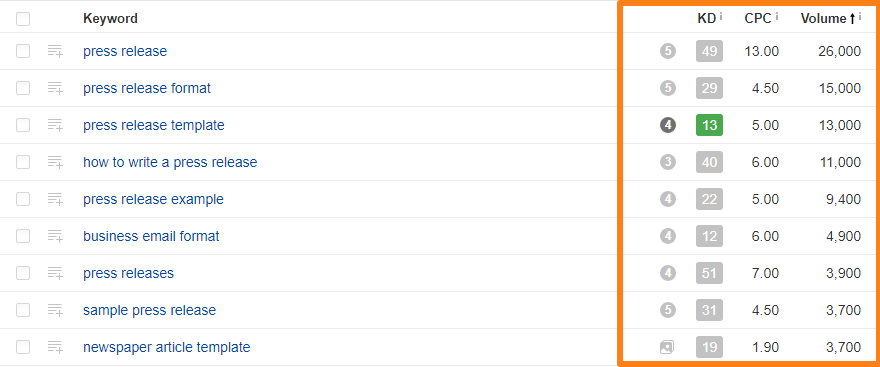
This invariably leads to a situation where you gravitate towards keywords with positive metrics and obvious relevance to your industry. These are often purely informational keywords with little to no buying intent.
For example, if you were to rank my product — JustReachOut, a PR tool — you might pick a keyword like “press release template”.
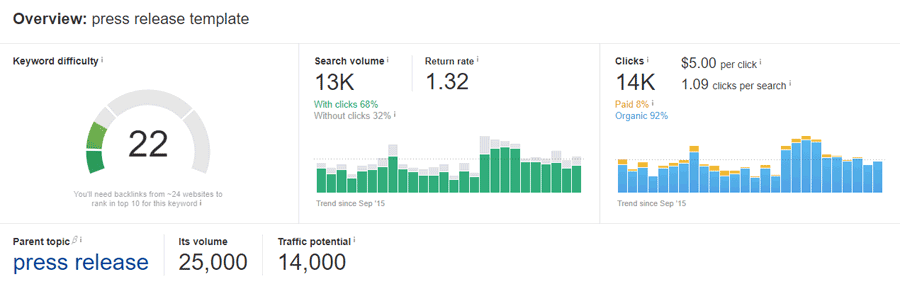
It has all the right metrics — 13k searches, $5 CPC — and industry relevance.
The problem?
All your competitors have the same idea as well. Just like you, they’re also looking for strong metrics and relevance.
This results in an intense competition where the only way to rank is to out‐create and out‐link everyone else.
For example, in my “press release template” keyword, I would have to beat HubSpot, Office.com, and CBSNews for the top spot.
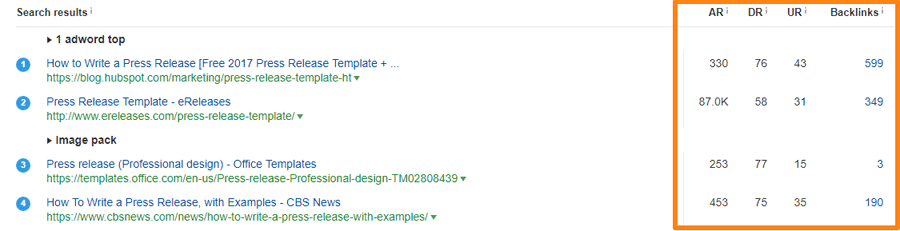
That’s some tough competition.
But as I’ll show you below, it doesn’t have to be this way.
With a tangential approach, you can avoid this competition altogether, and still land customers.
A Smarter Approach to Keywords
With this approach, you ignore the metrics everyone else is using to select their keywords — search volume, CPC, competitiveness, etc.Instead, you focus on keywords where you can:
- Intercept the customer in the middle of the purchase decision
- Piggyback on the authority of an established player in a related field
- Offer a better solution to a problem posed by an established player in your field
This approach works because of:
- Low competition: Since you’re targeting unconventional, low‐traffic keywords, you won’t have much competition in the SERPs. This means that you can often rank without even building any backlinks.
- Targeted traffic: This approach uses specific keywords that bring in highly targeted traffic. Your conversions will be high accordingly, as I’ll show you below.
- Business focus: Instead of simply looking at metrics, these keywords address customers' core issues and concerns about your or your competitor’s product. This “business‐focused” approach can often yield more targeted traffic.
The Foundation: Keyword Research for Low Volume Terms
Before diving into specific keyword types, let's establish the groundwork for finding these hidden gems.Traditional keyword research tools are designed to surface popular queries, which means they systematically ignore the exact opportunities we're after. To find low-volume keywords, you need to think like a detective rather than a data analyst.
Tools and Techniques for Discovery
The secret to uncovering low-volume keywords lies in understanding where traditional tools fail. Most keyword research platforms have a threshold below which they simply don't report data. This creates a blind spot that savvy marketers can exploit.While traditional tools have limitations, some are better at surfacing low-volume opportunities. TopicRanker excels at finding these hidden keywords by analyzing actual search behavior patterns rather than just reported volumes.
It identifies content gaps and emerging topics before they show up in conventional keyword tools. Similarly, KWFinder by Mangools provides more granular data on long-tail keywords, often revealing search volumes for queries that other tools mark as "zero volume."
Start with Google Autocomplete mining, but approach it strategically. When you begin typing your core topic followed by question words like "how," "what," or "when," Google reveals what real people are searching for, regardless of volume.
The trick is to go deeper than most researchers. After typing your main keyword, add individual letters of the alphabet to trigger new suggestions. You can also use underscores as wildcards to discover mid-phrase variations that would never appear in traditional keyword tools.
Answer the Public takes a different approach by visualizing the questions people ask about your topic. The real goldmine isn't in the popular queries it highlights, but in the questions that show zero search volume data.
These queries exist because real people asked them, but they're too niche for traditional metrics.
Focus primarily on comparison queries ("versus," "or," "vs") and preposition-based searches ("for," "without," "with"), as these often reveal highly specific use cases. Export everything and manually review each query for business relevance rather than relying on metrics.
Your internal site search data is one of the most underutilized sources of keyword opportunities. Whenever someone uses your site's search function, they tell you exactly what they expected to find but couldn't.
These queries often have zero "official" search volume because they're highly specific to your product or service. They represent immediate content opportunities with built-in demand from your existing audience.
Perhaps the richest source of low-volume keywords comes from customer support interactions. Your support team fields questions daily that represent real search queries people likely tried before contacting you. Mine your support tickets for repeated questions and specific problem descriptions.
When a customer says, "I need help connecting Salesforce to my inventory management system for my craft business," that's not just a support ticket; it's a perfect low-volume keyword opportunity.
Analyzing Search Intent for Niche Keywords
Low-volume keywords require a more nuanced approach to intent analysis because you can't rely on SERP features or competition metrics to guide you. Instead, you need to decode the intent from the query itself.Consider these three critical intent types:
- Commercial Investigation Intent: Queries comparing specific features or use cases (e.g., "can Airtable handle inventory for craft businesses?")
- Problem-Aware Intent: Searches describing exact pain points (e.g., "Excel crashes with large customer database")
- Solution-Aware Intent: Searches for specific functionality (e.g., "CRM with built-in invoice generation for freelancers")
These searchers are gold because they've already educated themselves and are deep in the evaluation process.
Problem-aware searches indicate someone who has identified their specific problem but hasn't yet connected it to a solution category. These keywords offer the perfect opportunity to position your product as the answer to their frustration. The more specific the problem description, the more likely they will convert when presented with a relevant solution.
Solution-aware searches represent the most conversion-ready traffic. These users know precisely what they want; they've identified their problem, determined the type of solution they need, and specified their exact requirements.
The ultra-specific nature of these searches means that conversion is almost inevitable if you match their criteria.
In the next section, I’ll show you how the first type — ‘Intercept’ keywords — work.
I. Intercept Keywords: ‘Steal’ Customers from Your Competitors
Imagine that you’re in the market for a new pair of running shoes.You drive over to Target and try out a dozen different pairs. The salesperson explains how to choose a running shoe, what kind of fit to look for and which brands to buy.
After an hour of trial and error, you finally settle on a pair. Pleased with your decision, you head over to the checkout counter.
However, before paying, you remember that you’d downloaded Amazon’s Price Check app to check prices online before buying.

So you whip out your smartphone, open the Amazon app, and do a quick search.
Sure enough, the shoes are $20 cheaper on Amazon, and you decide to order them online.
In other words, Amazon intercepted your purchase decision.
The store did all the selling. Amazon only appeared when you had to make the all‐important purchase decision.
It didn’t have to convince you to buy the product; the store’s staff had already done that. It only offered you a lower price and made the actual sale.
What I just described happens every day. 65% of US consumers conduct online product research before heading to a store. 25% of customers use their mobiles to make a purchase while they’re in the store.
No wonder Amazon has a patent to stop people from price shopping inside its store.
But how does all this have relevance to us online?
Easy: just like Amazon, you can also intercept shoppers’ purchase decision by targeting the right set of keywords.
I call these Intercept Keywords.
What Are Intercept Keywords?
Recall that a customer’s shopping process can be described as a “buyer’s journey” where he moves from ignorance to knowledge to a final decision.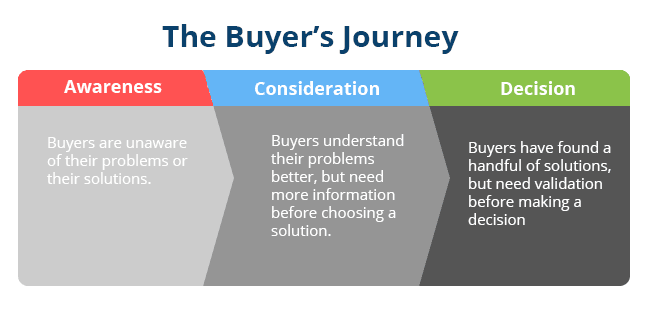
By the time this customer reaches the ‘Decision’ stage, he’s already done a ton of research about the product. He’s read multiple blog posts, analyzed his requirements and compared features.
But right before he hands over his credit card, he hesitates. He isn’t sure if the product is perfect for him. Or maybe he’s unsure of its price.
This is particularly true for B2B products where customers know they’ll likely be locked into the product for months, if not years.
So what does this hesitant customer do?
He searches for alternatives and compares their features and prices, trying to find something better or maybe something open-source.
This is exactly where you come in and intercept the customer’s shopping process.
Keywords that describe such interceptions are intercept keywords.
Measuring Success with Intercept Keywords
Traditional metrics don't tell the whole story when working with intercept keywords. Here's what to track:Micro-Conversion Metrics:
- Time on page (should be higher than average)
- Scroll depth (are they reading your comparisons?)
- CTA clicks (not just conversions)
- Bounce rate should be lower than the informational content
- Pages per session should be higher (they're researching)
- Return visitor rate (they come back before deciding)
- Track assisted conversions, not just last-click
- Monitor customer LTV from intercept keywords (often higher)
- Calculate revenue per visitor, not just conversion rate
Example
For example, I made this page for JustReachOut targeting the keyword “Cision alternative”: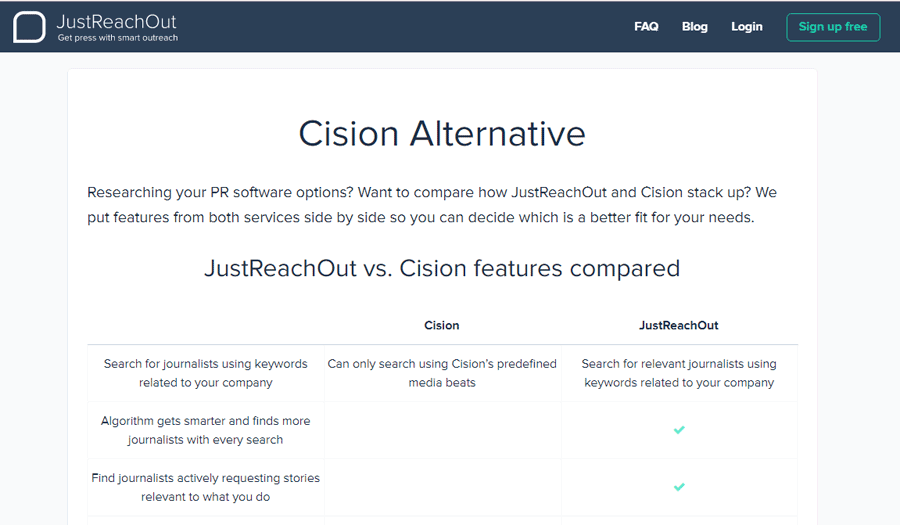
Cision is a major player in the PR software field. It dominates online, ranking for thousands of keywords and getting more than 100,000 organic visitors monthly.

Far more people search for Cision than they do for JustReachOut.

However, it is an expensive piece of software. It is also complex and too powerful for most casual users. Unless you’re running a full‐fledged marketing/PR agency, you won’t really make the most of the software.
This is where JustReachOut comes in.
By creating a page titled ‘Cision Alternative’, I’m explicitly targeting customers who:
- Want PR software (considering that they’re searching for ‘Cision alternative’)
- Know about Cision (since they’re searching for it)
- Want an alternative that fulfills their requirements
In fact, Cision Canada even ranks for “what is PR software”:
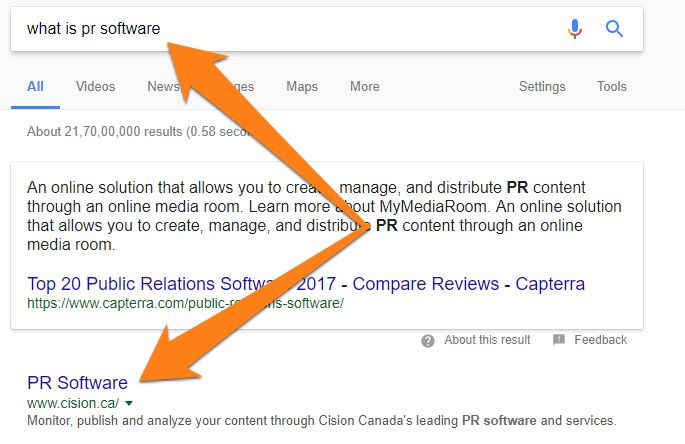
Instead of targeting such low‐information customers, I only intercept customers who already know about PR software and Cision and want an alternative.
“Cision alternative(s)” and “alternative(s) to Cision” aren’t major keywords in terms of search volume. If going by metrics was your only criteria, you’d reject them outright.
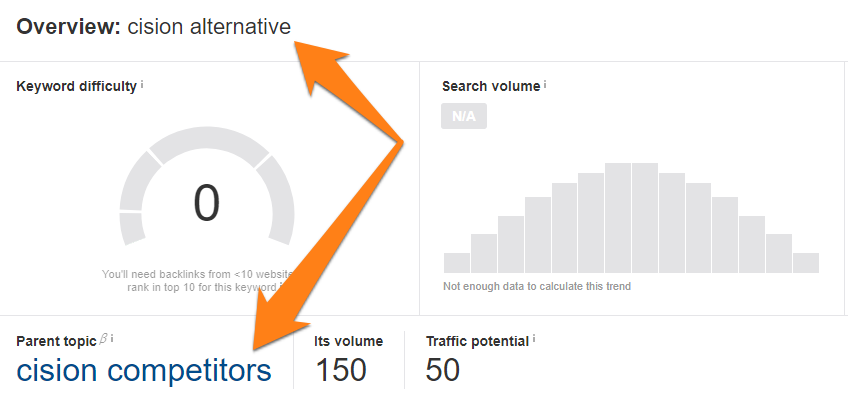
There is a higher‐volume parent topic — “Cision competitors,” but I rejected it because its competition was too high.
Instead, I targeted an “unsexy” keyword with non‐existent metrics.
Yet, this ‘low‐volume’ keyword has earned me 10 paying customers in just one month with a conversion rate of 3.5%.

All this with just one backlink (and that too from my own site):
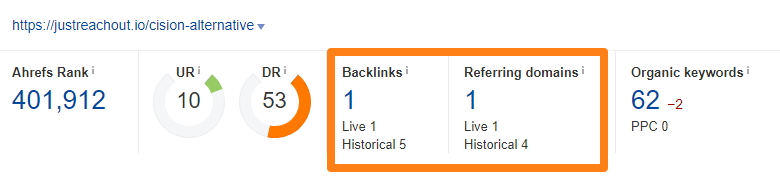
Why did this work?
Because I intercepted the customer while he was in a decision‐making process, highlighted the pros of my product, and offered him something that solved his major pain points.
And because my strategy was to target a keyword so low on the totem pole that most people would ignore it completely, I had no difficulty in ranking for it.
This is the power of intercept keywords.
How to Find Intercept Keywords
To find intercept keywords, think of how a typical customer would approach a purchase decision for a product.What questions would this customer ask himself before deciding what to buy? Would he look for alternatives? Would he look for better prices? Would he compare the product he’s chosen to another?
Essentially, you’re looking for keywords which indicate:
- That a customer has sufficient knowledge about the product. This usually means that the keyword includes the name of the product.
- That a customer is hesitating before making a purchase decision. Searching for “better”, “cheaper”, “faster” alternatives, or comparing two products is a good sign.
On the next screen, in the ‘Include’ field, add words that imply a hesitation in the customer’s decision.
To find intercept keywords, pick a major competitor. Plug its name into the Ahrefs’s Keywords Explorer, then select “All” under ‘Keyword Suggestions’ in the left pane.
On the next screen, add words that imply a hesitation in the customer’s decision in the ‘Include’ field.
Some of these words are: alternative, flaw, better, cheaper, issues, vs, faster, comparison/compare, etc. For software products, you can also use ‘free’, ‘open source’.
Add these, one by one, to the ‘Include’ keywords list.
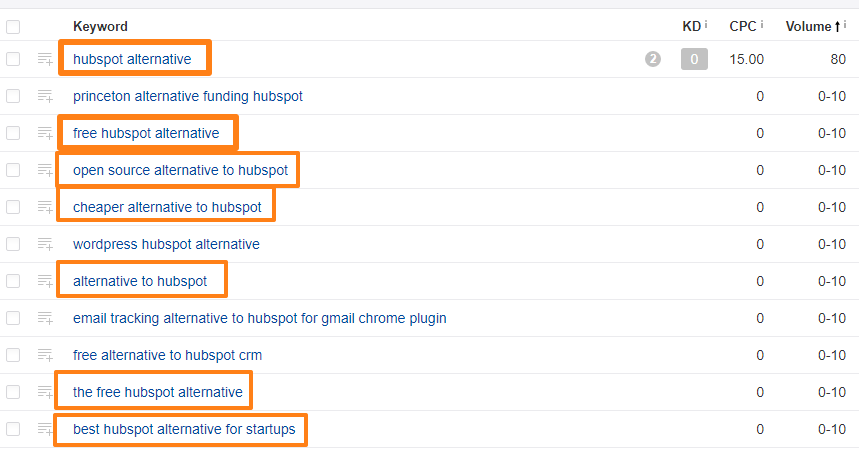
For example, here’s what you’ll see if you set a filter for keywords that contain “alternative” for HubSpot:
And this is what you see if you filter for keywords with the word “better” in them:
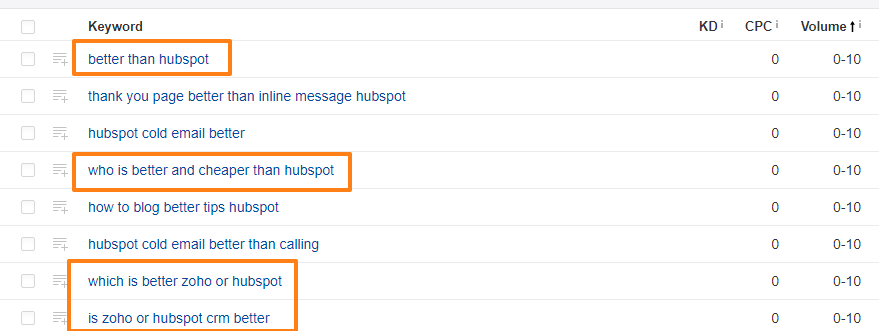
Anyone searching for the highlighted keywords shows that they have sufficient knowledge about the market. They’re also hesitant to decide; otherwise, they wouldn’t look for “better” or “cheaper” alternatives.
If you create a page targeting these concerns, you have a good chance of landing some customers.
Don’t be turned off if your target keyword has 0–10 searches/month. This doesn’t necessarily mean that no one is searching for these terms. Instead, it means that people might be using alternative terms and phrases with these queries.
If you do create content for these keywords, Google will send all these people to you since you’re the only one targeting them.
A NOTE ABOUT INTERCEPT KEYWORDS
When you use intercept keywords, you are essentially comparing yourself to competitors.
It’s important to be truthful here. Any information you show on your page must be honest and accurate. Otherwise, your competitors will complain, and your customers will lose trust.
A good approach is to focus on your product’s pros instead of the competitor’s cons. Play up what makes your product great instead of simply bashing the competitor.
It’s also a good idea to avoid a competitor’s native terms when bidding for them, such as “[competitor] features,” “[competitor] pricing,” etc.
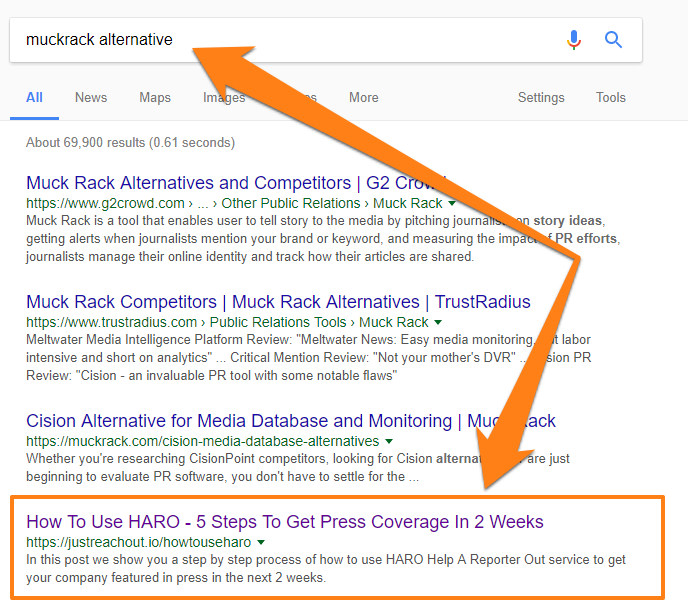
For example, one competitor — Muckrack — complained about my “Muckrack Alternative” page since I was ranking for their native term, “muckrack pricing.” So, I redirected it to my page on how to use HARO.
This page now ranks on the first page for “muckrack alternative”!
In the next section, I’ll share another highly lucrative, but equally ignored keyword type — the “piggyback” keyword.
II. Piggyback Keywords: Build Your Base on Another’s Authority
In every industry, there are a few established players that dominate the market.Because of their dominance, a number of companies “piggyback” on their success by making products that appeal to their customers.
The mobile accessories market is a perfect example. This market has ballooned to tens of billions of dollars based on the popularity of smartphones.
In other words, mobile accessories manufacturers have “piggybacked” on the success of smartphone companies.
This is true for any popular product. Customers invariably want to know if they can use it with another product.

For us, this represents a massive opportunity, but the one that isn’t always clear.
For one, you’ll rarely find these piggyback keywords in search results — their search volume is too tiny to register.
Instead, you’ll have to “make” these keywords yourself by guessing customer demand.
But first — what exactly are piggyback keywords and how do they work?
What Are Piggyback Keywords?
Piggyback keywords represent the intersection of two products’ users — an established one, and yours.The established product is usually not a competitor. Instead, it’s a product in a closely related field.
People who use this product often look for solutions that work well with it. For instance, you often hear of how a new productivity software is no good because “it doesn’t work with Gmail or Outlook”.
I’ll show you an example that makes this much clearer.
Example
HubSpot is the Goliath of the content/inbound marketing field. It dominates the marketing mindspace and occupies thousands of keywords.
As inbound marketers, HubSpot’s customers are interested in getting backlinks and mentions on authority sites.
However, because they’re usually inbound agencies and not PR agencies, buying a suite of expensive PR tools makes no sense for them.
A solution that is leaner and targets their specific needs works better for them.
Hence, I created this page:
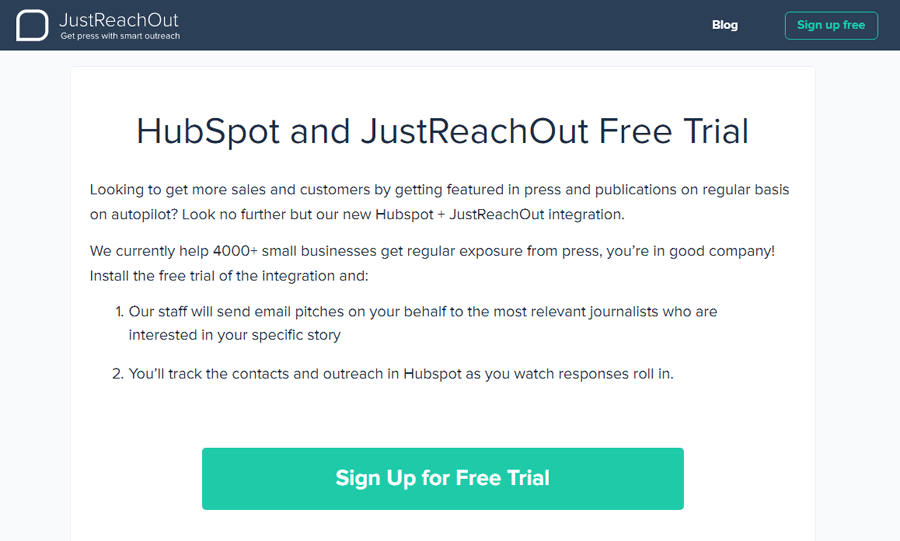
This page advertises a free JustReachOut trial for HubSpot’s users. The keyword is branded, implying awareness on the searcher’s part of HubSpot, JustReachOut or both.
This branded keyword “Hubspot JustReachOut” has no search volume.
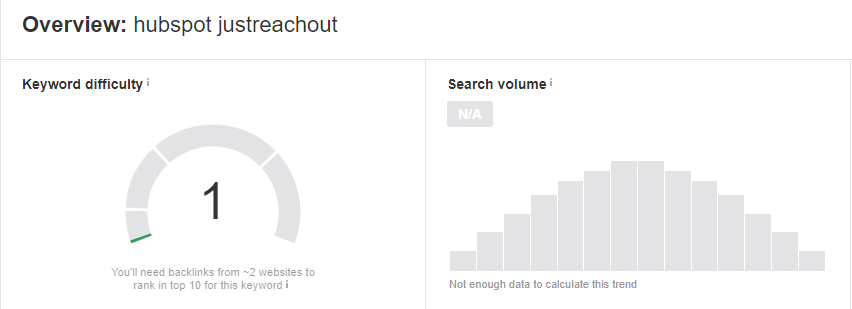
Yet, it ranks for a number of branded keywords, particularly those related to HubSpot — HubSpot trial, HubSpot PR, HubSpot sales vs outreach, etc.

These present opportunities to sell to people already aware of HubSpot, thus piggybacking on its authority.
This is how this low‐traffic page got me three paying customers from 297 visitors in the last month:

If I had taken the traditional approach to keywords, I wouldn’t have even thought of this page.
How to Find Piggyback Keywords
With these keywords, you have to first find a popular product in a closely related field to piggyback on.This product usually:
- Has a large number of users
- Dominates a closely related but larger field (PR > Marketing; Email Tracking> Sales CRM, etc.)
- Offers some way to pair up with it (such as an API to integrate with)
For example, a salesperson using Outlook might want to track the performance of his emails. He might search for “track sales emails with Outlook.”
These are the top results for this search:
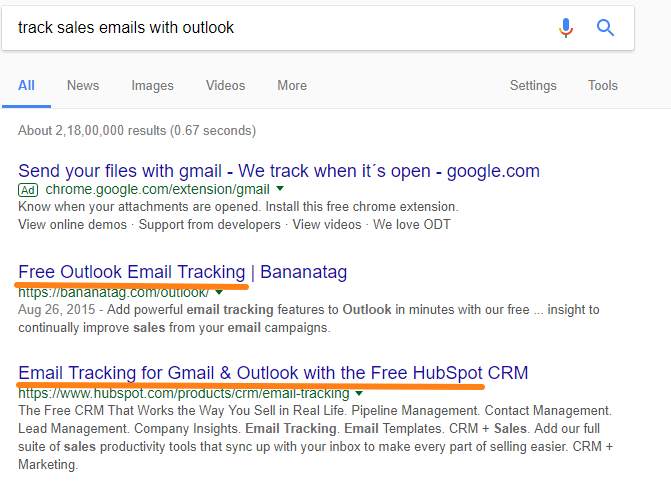
In this case, Bananatag and HubSpot have piggybacked on a popular software — Outlook — and used it to push their services. The targeted content is specifically tailored for Outlook users who want to do a specific thing — “track sales emails”.
This is precisely what you have to do: find out how a popular product’s user requirements intersect with yours.
And again Ahrefs comes in pretty handy here.
Start by searching for the popular product’s website in Ahrefs Site Explorer. Then select ‘Organic Keywords’ in the left pane.
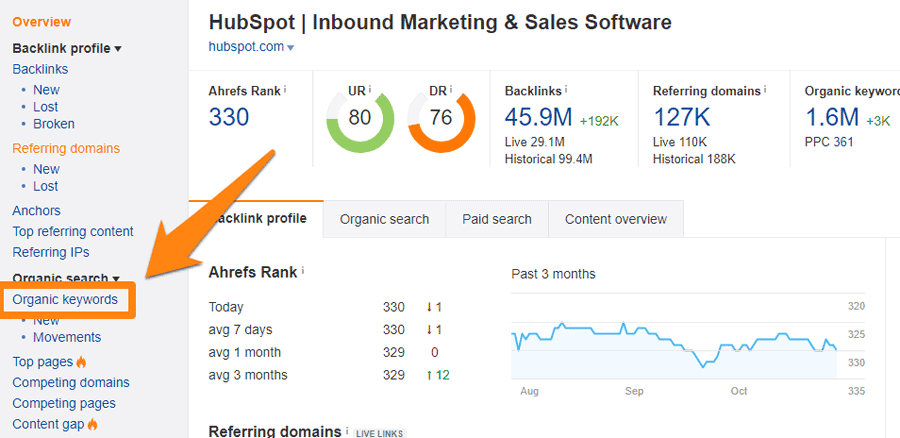
On the next screen, search for a broad keyword related to your product. In my case, it would be “press” or “journalist”.
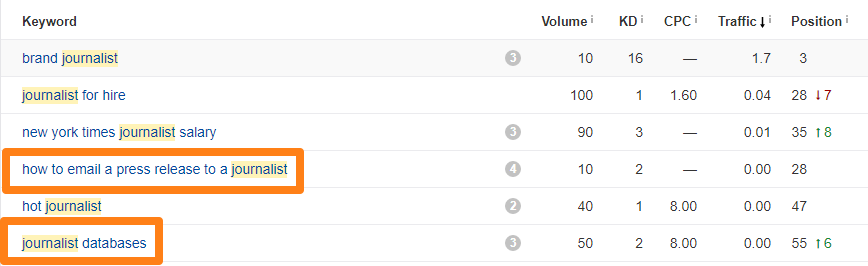
This will show you all the pages on the product’s site that rank for keywords containing your target word.
Don’t worry about the search volume. Rather, consider how closely related the search is to your product.
In my case, it tells me that people who use HubSpot want to know “how to email a press release to a journalist” and where to find “journalist database”.
Both of these are services JRO provides.
Thus, creating a HubSpot + JRO integration page makes it possible for me to piggyback on these HubSpot users who are aware of HubSpot (because they are making branded searches).
Simple, but highly effective.
III. “Faster Solution” Approach: Help People Use a Popular Tactic
This is like the piggyback approach, but with a twist.Instead of finding a popular product in a related field, you find a popular tool related to a dominant in your field. Then you help people use that tool better.
The theory goes: if you create a definitive resource for a tool you’ll show up when people search for that tool.
This allows you to pitch your product instead of using the free tool.
Let’s see how these keywords work below.
What are “Faster Solution” Keywords?
In every industry, there are some dominant and well‐known tactics. For each of these tactics, there are also a few popular tools to do them faster.In the SEO industry, for instance, “broken link building” is a popular tactic for building links.
To master this tactic, you’ll likely use several tools, such as Google, Ahrefs, Xenu, and ScreamingFrog.
Now anyone who wants to be good at broken link building will also want to be good at one (or all) of these tools.
If you can create a definitive resource to using these tools, you have a good chance of showing up when someone searches for “how to use [x]” (as Moz does here):
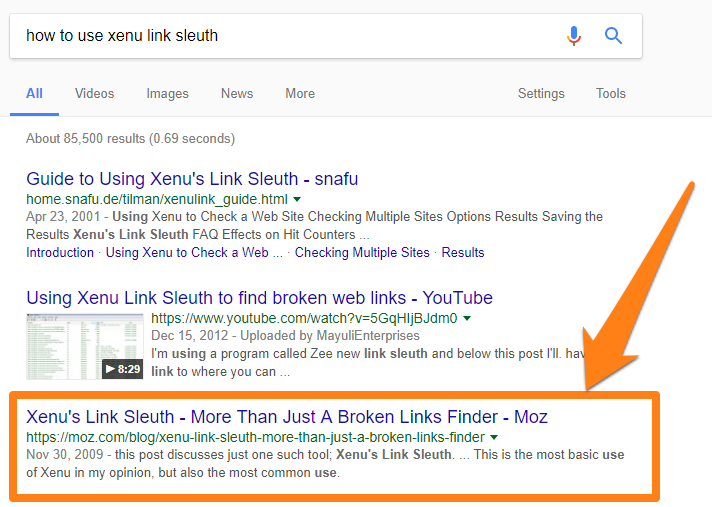
When they land on your site, you can pitch your product as a “faster solution” to the tool in question.
This is similar to the above‐mentioned tactic in that you’re also piggybacking on a popular tool.
I’ll show you how this approach works with an example.
Example
One of the most popular tools in the PR field is called HARO — Help a Reporter Out.HARO connects journalists with sources. Journalists email HARO with their requirements — say, a quote for a story, a suitable candidate for an interview, etc.
HARO sends out an email to all its subscribers with the request. Anyone interested in the request — marketers, entrepreneurs, bloggers, etc. — can reply to the journalist and get a press mention. All for free.
You can gauge the popularity of HARO by its search volume:
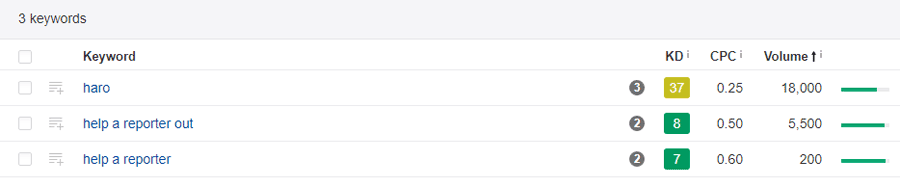
HARO is self‐explanatory enough, but people still need guidance on using it.
This is a tiny minority as represented by the search volume for “how to use HARO”:
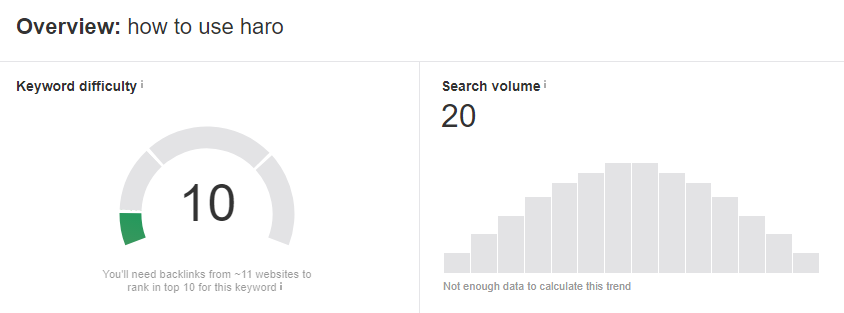
However, as we’ve learned so far, low search volume can lead to customers if you pitch your product correctly.
Plus, low search volume often leads to more traffic than the search volume indicates. As Ahrefs’ research shows, the average #1 ranking page will also rank for 1,000 other relevant keywords.
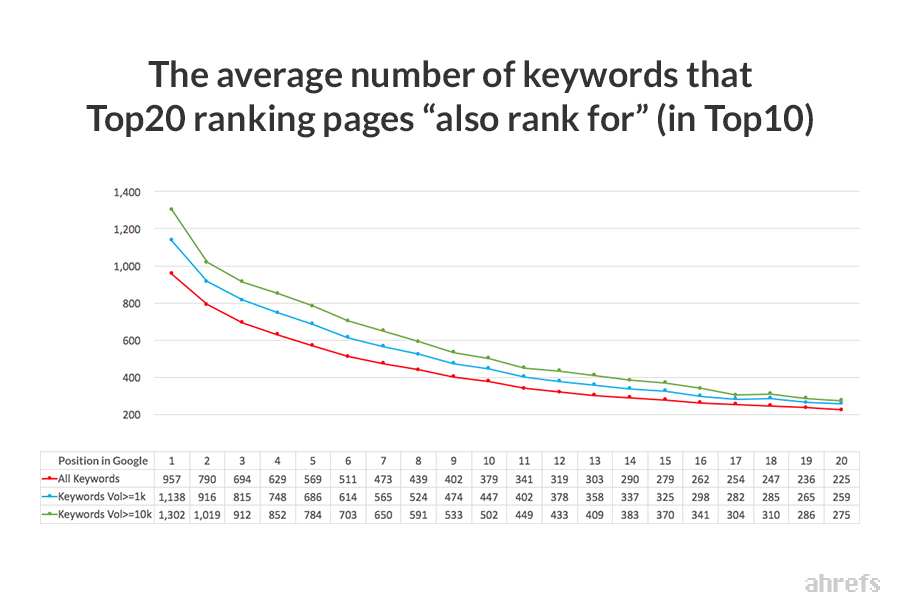
In other words, you can expect to get much more than just 10 visitors/month if you rank for a keyword with 20 searches/month.
Keeping this in mind, I created this page:
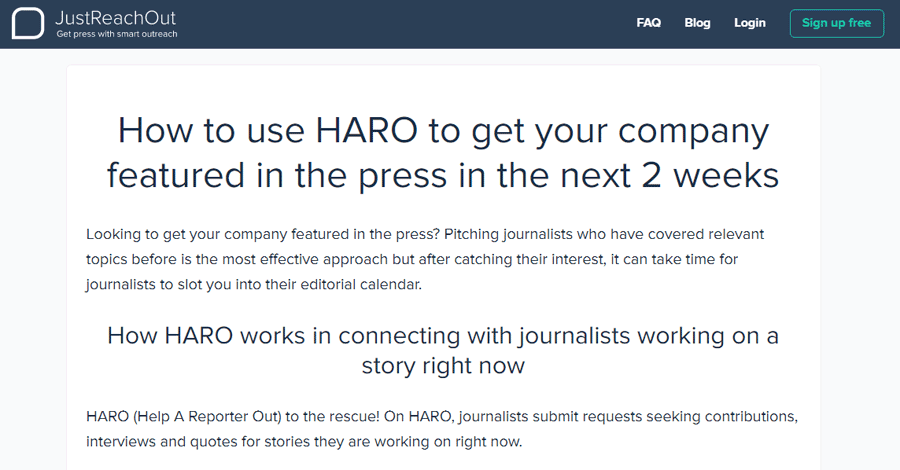
This is essentially a step‐by‐step guide to using HARO.
Keeping in line with Ahrefs research, I quickly started ranking for a number of keywords related to using HARO:
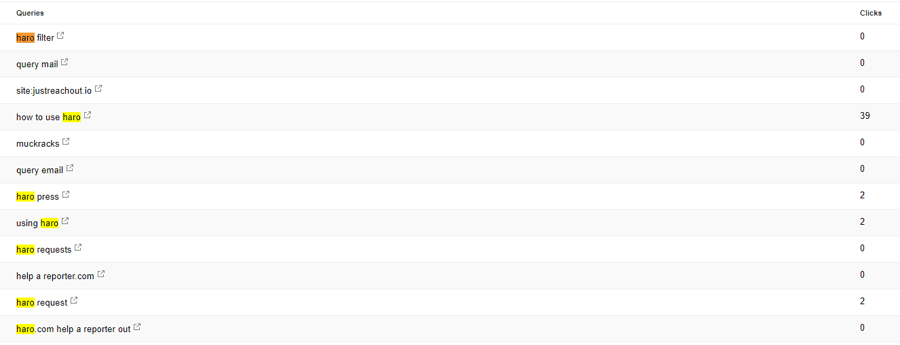
The traffic isn’t much, but it still got me 7 paying customers.

All of this without even building any backlinks to the page!
In the next section, I’ll show you how to find such keywords.
How to Find ‘Faster Solution’ Keywords
To find these keywords, you have to first:- Find a popular tool related to what you do
- Find keywords people use in relation to said tool
Make a list of all tools you find, then plug them into Ahrefs’ Keywords Explorer. Your goal is to target the most popular tools among them (by search volume).
In this case, it’s HARO:
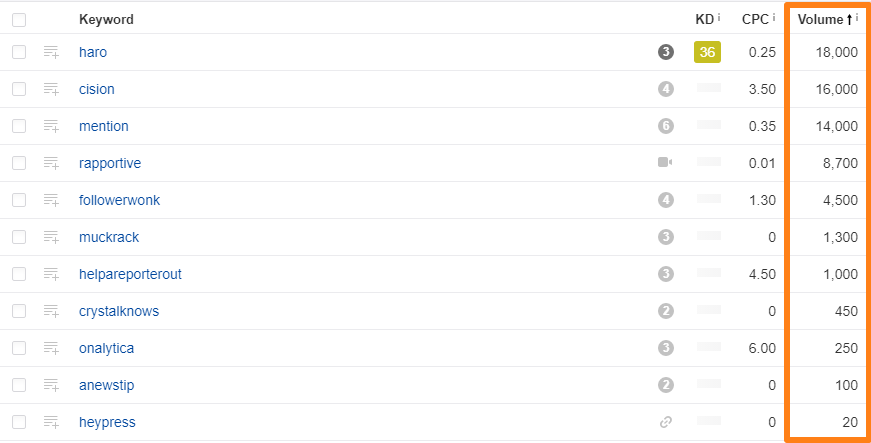
Next, search for this tool in the Keywords Explorer. In the left pane, select ‘All’.
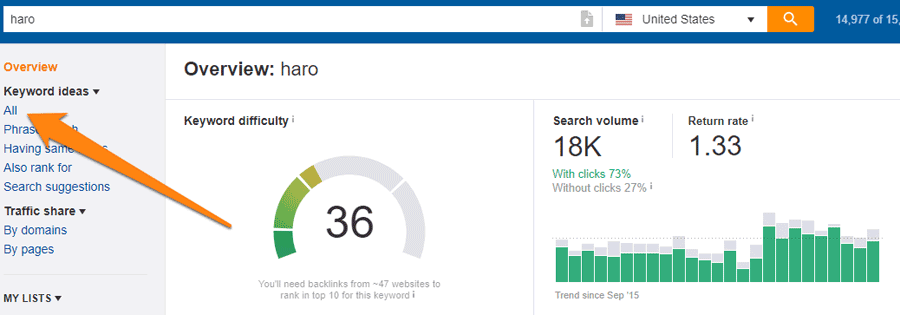
On the next screen, our goal is to find out how people use this tool and create a definitive guide around it.
Since we’re looking for doing, i.e. activity words, use the keyword length filter to only look for keywords with 3–8 words in them. Keywords shorter than that rarely relate to specific activities.
Also, add the keyword “how” to the list of words to include. Again, “how” keywords are usually activity-related.
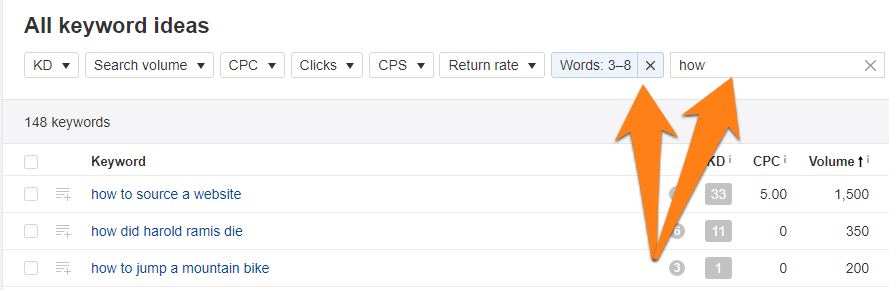
Now go through the list of keywords. See anything that is a) related to HARO, and b) related to how people use HARO (to find journalists, to find sources, etc.).
For example, all these keywords are somehow related to HARO:
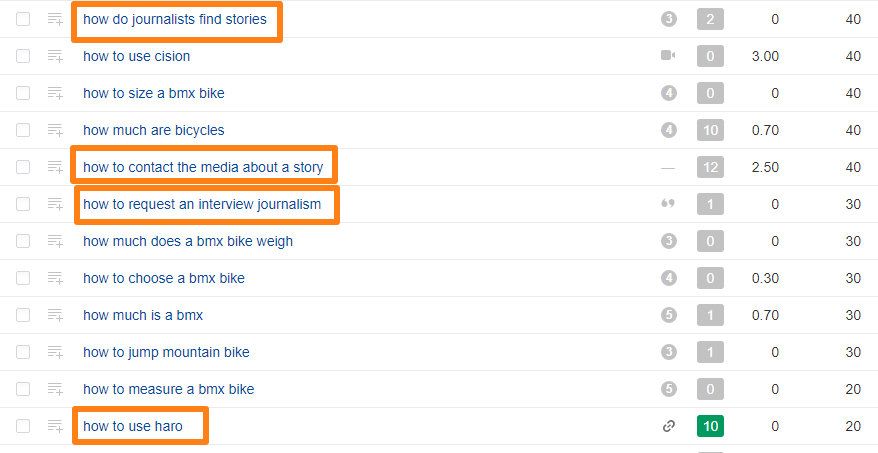
I could target any of them and still land customers thanks to their specificity.
Once you find such keywords, create content around them. Your goal is to position yourself as a definitive resource on that topic.
Once you start ranking, pitch your product as a ‘faster’ alternative and watch the customers roll in.
Content Creation for Low Volume Keywords
Creating content for low-volume keywords requires a fundamental shift in how you approach SEO content.Every word counts when targeting queries with minimal search volume, and generic optimization tactics will likely fail. Success comes from understanding that these searchers have ultra-specific needs that demand ultra-specific solutions.
Optimizing for User Intent
The traditional approach of targeting keyword density and word count is irrelevant when dealing with low-volume keywords. Instead, your content must laser-focus on the exact problem your searcher is trying to solve.Start by answering the exact question within your first 100 words. When someone searches for "how to integrate Zapier with a custom-built inventory management system," they don't want a history of API development or a generic guide to integration.
They want specific steps for their particular situation. Use their exact phrasing in your content – this isn't keyword stuffing when it naturally matches how people describe their problem.
Comprehensive coverage means anticipating the follow-up questions your specific audience will have. If someone is searching for integration help, they'll likely need troubleshooting tips, common error messages, and performance optimization advice.
Include these related micro-topics naturally throughout your content. Your goal is to create the definitive resource for that specific query, not just another generic guide.
Format your content to fit the way people consume information online. Descriptive headers that match search intent help scanners find exactly what they need.
For longer pieces, jump links let readers navigate directly to their concerns. Summary boxes at the beginning of sections give time-pressed visitors the quick answer they need while encouraging deeper exploration.
Building Topic Clusters
Low-volume keywords achieve their full potential when organized into strategic topic clusters. This approach multiplies your authority and traffic potential exponentially.Think of your content structure as a hub-and-spoke model. Your hub content targets a slightly higher-volume keyword that still maintains specificity—something like "PR outreach for SaaS companies" with perhaps 200 searches per month. This becomes the foundation for your topic authority.
From this hub, create spoke content targeting ultra-specific queries:
- "PR outreach for B2B SaaS with under 10 employees"
- "PR outreach for SaaS companies targeting healthcare"
- "PR outreach budget template for SaaS startups"
- "PR outreach automation for bootstrapped SaaS"
Google recognizes the semantic relationships between your pages, boosting all of them. You capture more total search traffic while creating natural internal linking opportunities that strengthen your entire cluster.
Internal Linking Strategies
Strategic internal linking is the secret weapon for low-volume keyword success. Without the ability to build backlinks cost-effectively for every low-volume page, internal links carry more weight.Contextual linking from your high-authority pages gives low-volume content the boost it needs. Since competition is minimal, you can safely use exact match anchor text without triggering over-optimization penalties.
Create content hubs that naturally link related pieces together, making it easy for users and search engines to understand the relationships between your content.
Navigation enhancement ensures your low-volume pages don't become orphaned. Add them to relevant category pages where they make sense. Include sections like "Popular Comparisons" or "Specific Use Cases" in your footer or sidebar. Create dedicated resource sections that showcase your depth of coverage for specific topics.
Cross-linking between similar intent pages creates powerful user journeys. Link comparison pages to alternative pages, connect problem-identification content to solution content, and build clear paths between different buyer journey stages.
Someone comparing "Mailchimp vs ConvertKit for course creators" should easily find your pages on "Email automation for online courses" and "Best email templates for course launches."
Measuring ROI on Low Volume Keywords
Traditional SEO metrics fail to capture the actual value of low-volume keywords. Measuring success requires a more sophisticated approach that accounts for quality over quantity.Key Metrics to Monitor
Traffic quality trumps traffic volume when evaluating low-volume keyword performance. An engagement rate above 70% indicates you're attracting the right audience.The average session duration should be at least twice your site average—these visitors are researching deeply, not bouncing after a quick glance. Multiple pages per session show research behavior, signaling commercial intent even if immediate conversion doesn't occur.
Conversion metrics need a broader definition for low-volume keywords. Track micro-conversions like email signups, content downloads, and demo requests. These indicate progress through the buyer journey even without immediate purchase.
Assisted conversions often represent 40-60% of the total value from low-volume keywords. Visitors frequently return multiple times before converting. To understand true value, calculate revenue per visitor rather than just conversion rate.
Long-term value indicators reveal the compound effect of low-volume strategies:
- Customer lifetime value from these keywords often exceeds high-volume traffic
- Word-of-mouth referrals (track through "how did you hear about us" surveys)
- Brand search increases after visiting low-volume content
- Return visitor rates and bookmark behavior.
Setting Realistic Expectations
Success with low-volume keywords follows a predictable timeline that differs significantly from traditional SEO campaigns.Months 1-3: Focus on building and indexing. Expect minimal traffic during this phase. Your attention should center on ranking improvements and ensuring proper indexation. Monitor crawl frequency to ensure Google is regularly visiting your new pages. Initial rankings may fluctuate wildly – this is normal for new content targeting undefined keywords.
Months 3-6 bring traffic growth. Well-targeted low-volume content typically sees 50-100% month-over-month growth during this phase. First conversions usually appear around month four or five. You'll notice related keywords beginning to rank – a single page targeting "project management for architecture firms" might start ranking for dozens of related long-tail variations.
Months 6-12 reveal the compound effect. Each successful page now ranks for 50-200 related terms. Conversion rate optimization becomes important as traffic reaches meaningful levels. ROI should be clearly positive by this point, justifying continued investment in the strategy.
When to Pivot or Double Down
Recognizing when to double down versus when to pivot can make or break your low-volume keyword strategy.Double down when you see:
- Any conversions within the first six months, regardless of volume
- Rankings in the top 3 positions achieved with minimal effort
- Engagement metrics consistently above 70%
- Customer feedback specifically mentioning the content
- Related keywords beginning to rank without targeting them
- Zero rankings after six months of indexation
- Bounce rate consistently over 80%
- No related keywords showing any ranking movement
- Traffic arrives, but with a clear search intent mismatch
Rewrite with a different intent focus if you're attracting researchers when you want buyers. Convert to sales enablement content – even if it doesn't drive organic traffic, it might support your sales team.
Common Pitfalls to Avoid
Even experienced SEOs stumble when transitioning to low-volume keyword strategies. Understanding these common pitfalls helps you avoid months of wasted effort.Over-Optimization Mistakes
The low competition of these keywords creates a dangerous temptation to over-optimize. Just because you can stuff keywords doesn't mean you should.Google's quality algorithms apply regardless of competition levels. Focus on natural language that serves the reader. Use semantic variations and related terms rather than forcing exact match phrases where they don't belong.
Thin content syndrome plagues many low-volume keyword attempts. The misconception that low volume equals low effort leads to superficial content that fails to satisfy user intent.
Your content needs the same depth and quality as any competitive keyword – perhaps more so, since you're often addressing complex, specific problems. Include detailed examples, case studies, and unique insights that can't be found elsewhere.
Technical SEO basics still matter, even with minimal competition. Fast page load times, mobile-friendly design, and proper schema markup contribute to user experience and ranking potential. Don't neglect these fundamentals just because competition is low.
Neglecting User Experience
Low volume doesn't mean low effort in design and user experience. Professional formatting, relevant images, and consistent branding signal credibility to your particular audience, which often has sophisticated needs and expects a professional presentation.Navigation structure becomes even more critical when dealing with numerous low-volume pages. Clear breadcrumbs help users understand where they are in your content hierarchy.
Related content suggestions keep engaged visitors exploring. Logical URL structures make sharing and bookmarking easier for your niche audience.
Every page needs a clear purpose and a call-to-action. Include relevant CTAs that match the search intent and buyer journey stage. Offer logical next steps based on the specific problem you've solved. Make conversion paths obvious without being pushy.
Ignoring Search Intent
Content type must match user expectations. Comparison searches demand side-by-side feature tables, not narrative prose. "How to" queries require clear step-by-step guides with screenshots or videos.Alternative searches need honest feature comparisons highlighting your strengths without dishonestly portraying competitors.
Match content depth to the buyer journey stage. Don't overwhelm researchers with sales pitches, but don't leave buyers without enough information to make a decision.
The specificity of low-volume keywords often indicates exactly where someone is in their journey – honor that with appropriate content depth.
Geographic and industry considerations matter more with specific queries. Include region-specific information when relevant. Use industry terminology correctly – your niche audience will notice if you don't. Address regional differences in regulations, availability, or implementation when applicable.
In the next and final section, I'll share some tactics to get the most out of this unusual approach to keywords.
How to Make the Most of This Approach
Finding highly targeted low‐volume keywords and creating content for them is half the battle won.But to get the most out of this approach, you can do a few more things:
1. Use Contextually Relevant CTAs
When you’re working with low‐volume keywords, maximizing conversion rates should be a top priority.One way to do that, of course, is to use the right kind of CTAs.
Think from the perspective of a visitor landing on a page. What are this visitor’s top concerns and questions? How can you address them?
For example, on this page about using HARO (the ‘faster solution’ approach), I used a CTA that emphasizes ‘automating’ PR outreach:
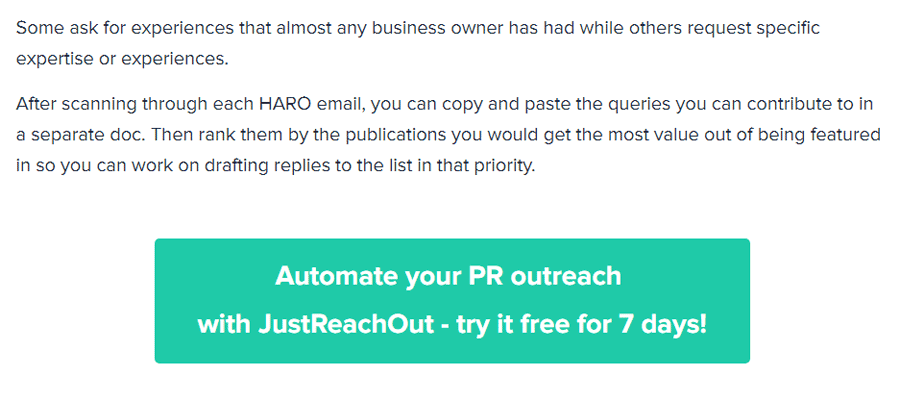
The page itself talks about making better use of HARO. It stands to reason that someone who wants to use HARO would also be interested in automating the process.
On this page targeting an intercept keyword — “Cision alternative” — I used a CTA that emphasized the risk‐free nature of my product:
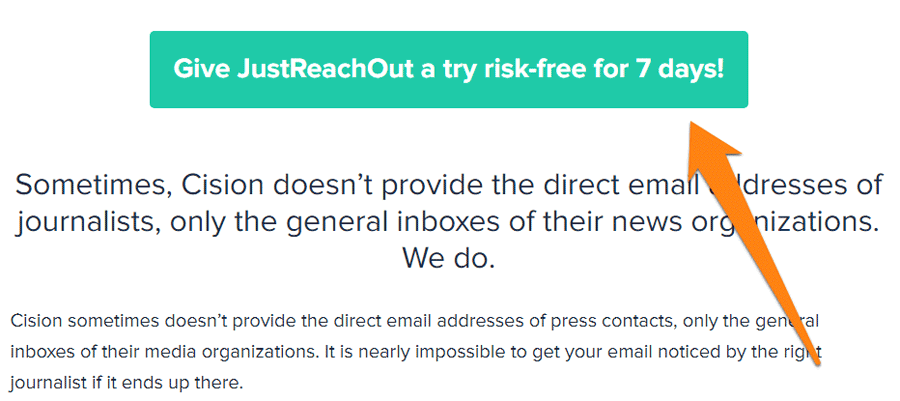
The “risk‐free” part appeals to a customer who is highly interested in a product category but circumspect about making an investment, which helps improve conversions.
So instead of using the same CTA on every page, use something that is contextually relevant to the visitor’s concerns and requirements.
2. Catalog Competitors and Relevant Tools & Tactics
The traditional keyword strategy sees competitors as a challenge.Our approach treats them as opportunities.
The more competitors you have, the more opportunities you’ll get to position yourself as a better, cheaper and faster solution.
So start by cataloging:
- Competitors and what issues/concerns people have about them. Figure out how your product can help address these concerns, then position yourself as an alternative.
- Dominant tools and tactics that people in your industry know and search for. Create guides that help them make better use of these tools. Position yourself as a faster way to get the same results.
- Related products that dominate a closely related industry. Figure out how people can use your product in relation to them.
3. Align Activity and Need
If you were selling running shoes, where would you rather sell them?- Outside a running track filled with amateur athletes
- Outside a candy store
The reason for this choice is simple: a person running on a track is primed to want tools that enhance his activity. There is contextual alignment between activity and need.
The same applies to online products.
A person buying an SEO product isn’t only searching for SEO; he is also searching for answers in several closely related fields, such as PR, inbound marketing, email tracking, data mining, web scraping, etc.
The need is to grow traffic/rankings. The activity to get there might be SEO with a mix of PR, data mining, etc.
Focus on these when you create content or search for keywords. Think of your customers' primary needs, then consider all the activities and tools they might use to fulfill them.
To attract these customers, create content around these activities — even if they’re unrelated to your field.
4. Scale
A low‐traffic keyword alone won’t send you enough traffic to significantly impact your business.But because creating such pages is easy (and often requires no backlinks to rank), you can easily scale to cover hundreds of keywords.
At that volume, the sheer number of pages would bring in lots of traffic.
Keep in mind that a #1 ranking page will also attract traffic from hundreds of related keywords.
So with a hundred of #1 ranking pages, you’re looking at traffic from potentially thousands of keywords.
This is the key to succeeding with this strategy. Instead of focusing on a single keyword, scale. Target as many “unpopular” keywords as you can, preferably those with some ‘buying’ intent.
This has the added benefit of risk reduction. Even if you fail to rank for a few keywords, you wouldn’t have invested tens of hours into creating content and building backlinks.
Over to You
Going after popular keywords works, provided you have the time and budget for it.If you’re short of either, a tangential approach can work better.
This approach eschews conventional long‐tail keywords and targets extremely low‐traffic but highly targeted keywords.
These are keywords where you can intercept the customer in the middle of the purchase process, piggyback on the success of a popular product, or offer a faster solution to a common problem.
The low search volume and limited competition of such keywords mean that you can rank without investing in backlinks. And when paired up with the right kind of copy and offers, you can land hundreds of paying customers from them over time.
Frequently Asked Questions
Can Keywords with Zero Search Volume Drive Meaningful Traffic and Conversions?
Absolutely. Keywords showing "zero volume" in tools like Google Keyword Planner are often grouped with similar queries and variations. A single page targeting one "zero volume" keyword can rank for hundreds of related long-tail variations. The author's case study shows earning 67 customers from 600 targeted visitors, with some individual pages converting 3-5 customers daily from supposedly low-volume keywords.How Long Does It Typically Take to See Results with Low Search Volume Keywords?
Results follow a predictable timeline: Months 1-3 focus on indexing with minimal traffic, months 3-6 show 50-100% monthly growth, with first conversions appearing around months 4-5, and months 6-12 reveal the compound effect, where pages rank for 50-200 related terms. Most well-targeted low-volume content achieves positive ROI by months 6-8.What's the Biggest Mistake People Make When Targeting Low Search Volume Keywords?
The most common mistake is creating thin, low-effort content because people perceive low volume as low value. However, these keywords actually require more depth and specificity since they address complex, niche problems. Users searching these terms have sophisticated needs and expect comprehensive solutions, not surface-level content.How Do You Scale This Approach to Make It Worthwhile for Business Growth?
Scale by targeting hundreds of related low-volume keywords rather than focusing on individual terms. Since these pages often rank without backlinks, you can efficiently create content targeting multiple intercept, piggyback, and faster-solution opportunities. The author suggests that 100 #1 ranking pages can capture traffic from thousands of related keywords, creating a substantial cumulative impact.Get the full playbook in your inbox.
20,000+ founders read my newsletter on building to acquisition in 3 years, working 3 hours a day.
